Showing posts with label Switzerland. Show all posts

Tuesday, May 14, 2019

Wiesenblumenkäse, or More German in These Titles!


If you are like me, you love cheese. If you are like me in additional ways, you also have a fairly skeptical eye when it comes to new cheeses. After a #blessed life of Taleggios, Comtés, Quadrello di Buffalos, Stiltons, Brie de Meaux, Cabra Romero, Montenebro, Farmhouse Cheddars, and, and… well I mean can it really get better? Is there better cheese out there? Forget better, is there other cheese out there that is still worth taking a financial risk on? What if it’s bad? Or, well, just forgettable? 

The world is on fire, and these are my concerns. 

I’ve ranted here before about how cheese + (alien substance x) generally gets the hard end of my judging judgment, as a truly great cheese would be able to stand by itself without adornment of bunches of black truffle, or seasonings thrown on top, etc etc. But! There are exceptions to this rule, and a good thing too. Otherwise we would not have the wonderful treat that is Wiesenblumenkäse, or the other Blumenkäse of its ilk. Yes, there is a whole ilk of this stuff. Wiese means field, Blume means flower, and Käse means cheese. I truly love the German language. 

In another rant, on another day, I’ll have to drop a little German language knowledge, and see how long and funny of a cheese name we can come up with. 


Origin: Switzerland? Thiesen?
Milk: Cow
Affinage: 6-8 months


Notes:
There are really just dried flower petals pressed all over the rind. Not rotten, but dried. There are very sporadic and small holes in the paste and tiny calcium crystals, so there is a lot going on here. 


Thoughts: 
Butterfat is the first thing you notice, as it immediately washes the palate in a rich wave of creamy goodness. For a ‘schnittkäse’, it is really very soft and bursts with floral flavors, that very butterfat being the perfect solution to draw out the floral notes. Not sweet like some fatty cheeses, it is savory with a full mouth feel. Herbal, with an aftertaste of onions and chives. Every now and then you get a bite of a piece of dried flower petal that has fallen from the rind, adding texture and a reminder of the flower petals from which the cheese gets its name. It does not have the gooey texture and salty pungency of other savory delights like Taleggio, but still delivers a complex experience that demands your full attention. Keep a bit of apple or wine on hand, because you will want something to cut through the fat in order to enjoy the third bite as much as you do the first. That being said, your breath may smell richly like cheese after this one. Like dried flowers and dried milk and more curdled and cut and aged milk.


Schnittkäse is one of a number of German language terms for cheese that do not translate directly into the English I grew up with. Cutting cheese? Cheese that can be sliced? Semi-firm cheese that lends itself well to slicing? There is a similar question about as to what Bergkäse means. What is and what is not a Bergkäse. Then again... myself and others grew up with the phrase 'Swiss Cheese', which is about as airtight a designator as... well... as Swiss cheese? 


Tuesday, April 16, 2019

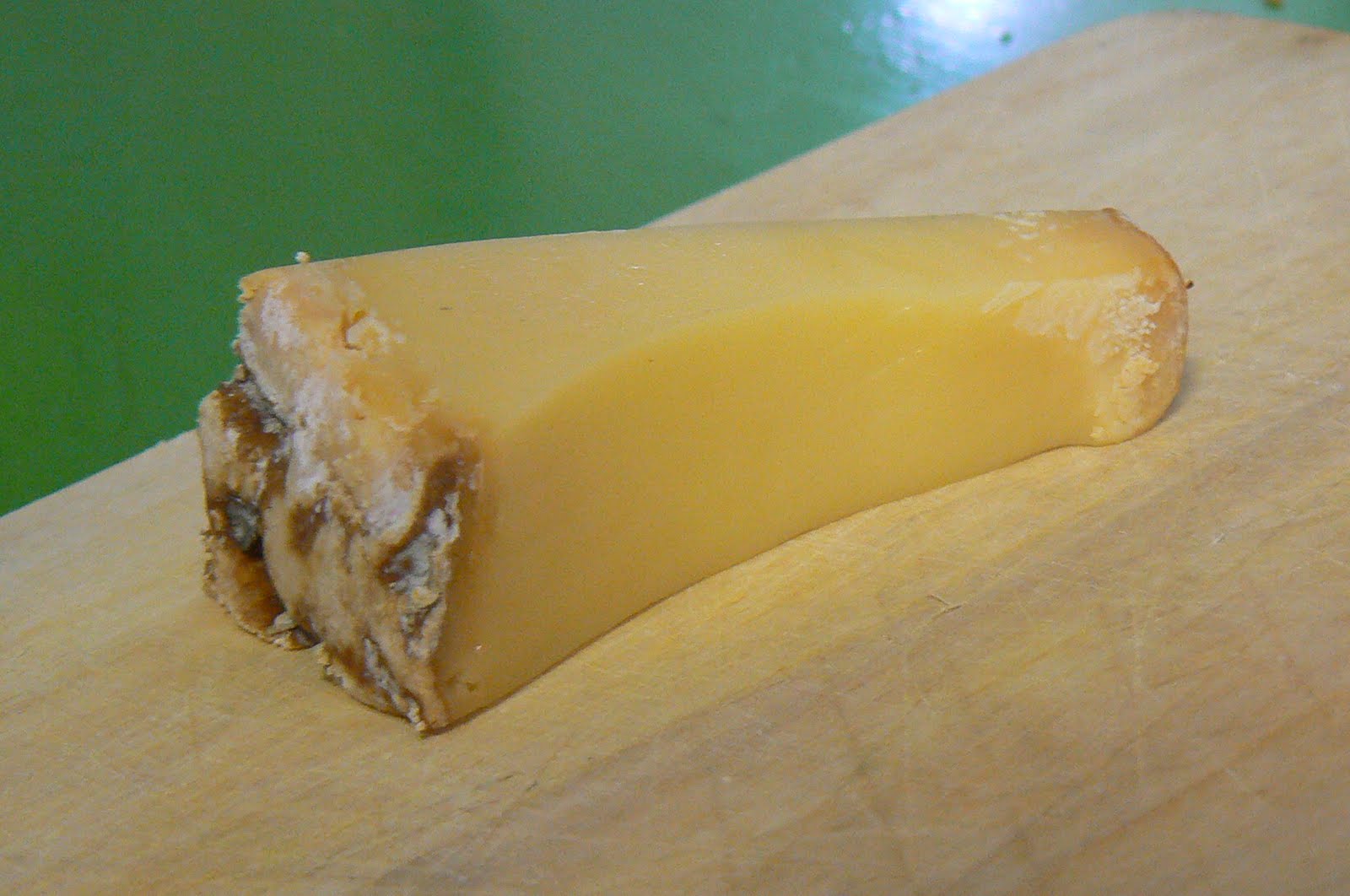
Stafelalper, oder der aus Zermatt


Yes, this is again a cheese I've purchased from the sale section (sale board, really) of my local cheese stand. I can't keep myself away. It's lovingly scripted invitations to try one of five or six (usually German, Swiss, or Austrian) cheeses is a siren song under whose spell I am powerless. Not all of these cheeses are winners. Some are labeled 'mild', which translates from the German roughly into: lacking a strong or powerful flavor, making only a little impression, see: bland. Others, however, carry the honorific of 'würzig'. I want würzig. And I will have würzig. And today I am going to write to you about würzig.


Origin: Zermatt, Switzerland
Milk: Cow, raw
Affinage: 14 months

Notes:
Würzig doesn't have a perfect translation into English, but comes pretty close at 'flavorful'.  Flavorful+. Flavorful + Spicy, but not like chili peppers spicy rather spicy like there are spices afoot here. Maybe just flavorful. If my armchair linguistics serve me correctly, it is related to the German word for spices; Gewürze. Which is a little misleading, considering this cheese has only milk, rennet, and salt* as ingredients.

Thoughts: This cheese has a lot going on! And I love it all. The initial impression is like biting into a well aged cheddar, all crunchy-chewy and creamy-sweet paste. Right away it takes a sharp left turn, though, and establishes itself proudly as a Bergkäse. The raw milk doesn’t bludgen the tongue and gums the way some are known to, but adds simply another pleasing layer of flavor and complexity. It is grassy and peppery on the front, but as the butterfat breaks down on the palate who is that over there all of a sudden?! Pears and berries! In a Bergkäse. What will they think of next! Everything on this cheese is working in symphony to create a real class act of a Bergkäse. The delicate crunch, the buttery paste, the raw milk and the peppery, fruity aftertaste. Next time you’re in Zermatt, make sure you track it down!


*Yes. Yes. I know 'salt' is a spice. In the way that water is a beverage. 

Tuesday, March 19, 2019

Gewitterkäs, or LIGHTNING CHEESE (!!!!!)


Today’s cheese has a different name depending on what country and language you happen to be buying it in. The cheese itself, that is to say the label in the home country of Switzerland, says Gwitterchäs. This is of course Swiss German for Lightning Cheese. Swiss German, in German, is called Schweizerdeutsch. In Schweitzerdeutsch, though, you don’t say Schweitzerdeutsch, you say Schwizerdütsch or Schwiizertüüsch, and you don’t say Gewitterkäse you say Gwitterchäs. That is, if you’re speaking Schweitzerdeutsch/Schwitzerdütsch. If you’re speaking Deutsch which is to say German than you say Gewitterkäse unless you’re speaking a local dialect in which case it might be more like Gwitterkäse or Gewitterkäs or Gwitterkas. Really it’s a wonder this cheese ever made it all the way over to my local cheese stand in Munich. München. Minga. 


Origin: Toggenburg, Schweiz
Milk: Cow, heated but not pasteurized
Affinage: 5 months

Notes:
Made, as the story goes, when a lightening storm hit the dairy and the recipe for a different cheese was mistakenly altered, resulting in this very buttery ‘mistake’. 

Thoughts:
Smells sweet like caramel or buttered toast. There is an earthy wildness to it, with notes of garlic and a texture that melts in your mouth. The more you eat the stronger there develops a theme of green onions, all carried along on a wave of heavy cream. The aftertaste has the raw milk tang we all know and love. It tastes fresh and vibrant, something you want to eat with a hearty beer. A slight peppery bite now and then due to the raw milk. 


You know what they say: 'Washed rind best rind'. 
They're always saying that.  

Tuesday, March 12, 2019

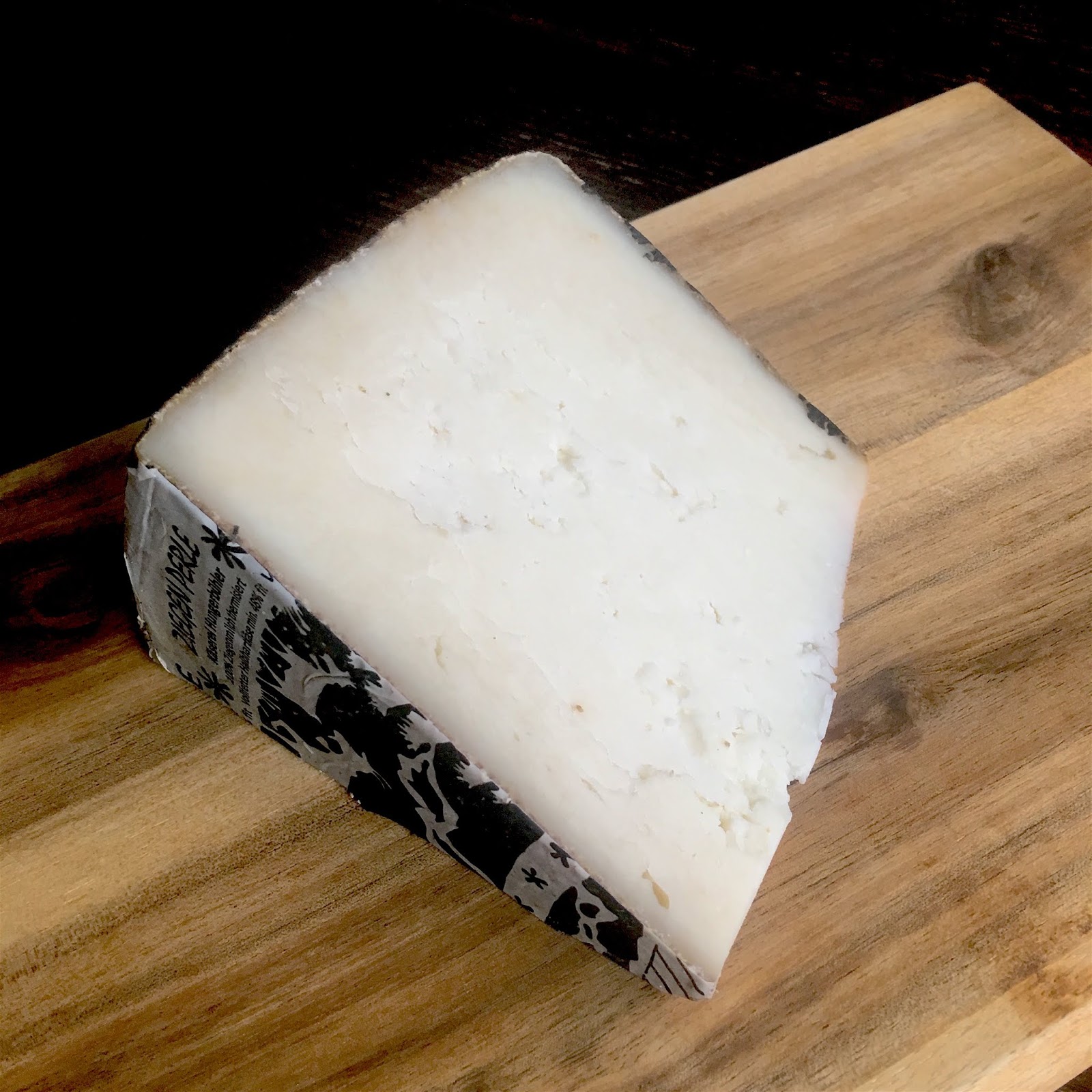
Ziegenperle, or... Goat Pearl?


I do not mean to preference German, Swiss, and Austrian cheeses of late, it just so happens that they are consistently on strong discount at our local cheese stand. I will also freely admit that I am on a long-term hunt for a fitting replacement for Cypress Grove's Midnight Moon, still an easy top five cheese. When I see that clean white paste I get my hopes up and... well let's just say a fitting replacement eludes me. So here I am, at the cheese stand, and joy of joys an aged goat cheese is on sale! How was the Ziegenperle? Let us see.

Origin: Switzerland
Milk: Goat, not raw and not pasteurized but heated
Affinage: 8-10 weeks

Notes: The wheel is regularly rubbed down in wine yeast during the aging process. So... let's hear it for wine yeast!

Thoughts: This cheese confuses me. Although it is high in butterfat the paste is chalky, salty, and, well, chalky. Chalk on chalk. Chalk all the way down. You do get some notes of hay and a hint of sweet cream, but the overwhelming flavor from the goat's milk is the zing and bite of the unpasteurized milk. This cheese attacks strong from the start and keeps your mouth puckered through to the end. Honestly, this is a little off putting by itself. The solution? Don't eat it by itself. The cheese breaks apart into an avalanche of small crumbles when you so much as look at it, and indeed it could make a fitting topping for pasta or roasted vegetables such is the strength and intensity of the flavor.  It needs at least a hardy bread to match it, but eaten right it is quite good. A little goes a long way!


I am admittedly not very well acquainted with the particulars of Swiss German, so it may be that I'm missing something in the translation... but Goat Pearl is a strange thing to name your cheese, is it not? Even Pearl of the Goat or the Pearly Goat... I'm just not sure those are better. 

Tuesday, July 19, 2011

Appenzeller, A Sub-par Swiss

Today's is a tale of a mighty mountain Swiss cheese that has fallen victim to mass production and export. Appenzeller, or Appenzell, gains its name from the canton of Appenzell in easternmost Switzerland. It has a lot going for it; washed in a secret brine concoction giving it fruity and spicy notes, made from raw milk, with the flavor-giving power of the Alps behind it, yet with quality comes popularity, with popularity comes demand, and with demands comes supply. Sadly most of the supply that reaches the fair shores of import countries is nowhere near the high standard that made it famous, so we find pieces like the one I bought.
Origin: Appenzell, Switzerland
Milk: Cow, unpasteurized whole milk
Rennet: Animal
Affinage: About 3 months
Notes: Some ingredients in the brine wash include: herbs, pepper, white wine, cider, water, salt. In proper operations this mixture will be tirelessly rubbed over the rind on repeat during the aging process to impart a strong essence into the cheese.
Thoughts: This piece struck me as being mildly  tangy and a little bitter, on account of the raw milk, but what got to me most of all was the rubbery, spongy texture. So elastic was it, in fact, and so forgettable were the carelessly arranged flavors, that I didn't even finish the small piece I bought, it just wasn't appetizing. Where does this leave us. In the spirit of objectivity I'd recommend finding and trying some if you can, it is an interesting cheese at the very least and couldn't do much harm to your next fondue. I wouldn't include it on a cheese platter, at the very least because there are such better Swiss cheeses to be had. Perhaps one day I'll find myself in Appenzell and I'll have a revelation, but so far I'm not impressed.


Question
Including the wrapper in pictures of food is really cool, right guys? 

Friday, July 8, 2011

Cave Aged Emmental, Have I Mentioned Age Matters?

Well it does, and today we are so fortunate as to have another example of why. 
Emmental, also Emmentaler or Emmenthaler, is the cheese everyone thinks of when they 
1) imagine Swiss cheese
2) imagine any cartoon-stylized cheese at all.
Some dork ruined my shot
Full of holes and looking almost as yellow as it does in the cartoons, Emmental is a cheese both reliable and versatile, and here we see how age comes into play. The gargantuan wheels are rolled down (or maybe carried down, but what kind of image is that?) from the mountains where a good deal go straight to the plates of the people, young, fresh, fully of sweet and fruity notes and of course that tart high mountain nuttiness. This is a perfectly acceptable cheese and the good people of Germany, Austria, and Switzerland go wild for it. Go to any big Volksfest and you'll see wheels and wheels of the stuff on display to be eaten with fresh baked pretzels and washed down with a liter of beer. Or apple juice, though that'll cost you extra. 
Though they buy this cheese by the 100s of grams with every pretzel they are fully aware that it's not the most flavor-packed cheese, and so they will typically add (I'd estimate) about 10g of salt for every 100g of cheese, just right on top. Seasoning cheese is not my preferred method of consumption so I'll usually brush most of it off, but though you can ask for it not to be salted the result of that would be almost worse; an overly mild cheese. 
Now, Emmental of any age is as honest and worthy a cheese as comes from the Alps, and the beer and pretzels may have something to do with the flavor getting lost, but no one would claim that young Emmental is a party cheese, a display cheese, even a table cheese. You either slice it up and give it to hard-partying Bavarians with salted pretzels and more salt or you ship it abroad so it can be sliced up and put in sandwiches. 
However. 
Today's review is titled "Cave Aged Emmental", and so let's get on to that. As the name so eloquently puts it, this variety has been aged. In caves. Whelp! Let's have a picture!
Origin: Bern, Switzerland
Milk: Cow, unpasteurized
Rennet: Animal
Affinage: I'd estimate around the 1 year mark
Notes: There is some confusion over the name Emmental, understandable given its different spellings, pronunciations, and also that the French make their own variety. This one is name controlled within Switzerland, so we'll see who's left after the great cheese naming war to come.
Thoughts: The first flavors to hit the palate are very grassy and light, and as the taste develops there is a hint of meatiness. The whole experience, though complex with definite fruity and nutty notes, remains very light-handed and never really gives the punch of the typical aged cheese, especially made from raw milk. The raw characteristics are definitely there, showcased mostly towards the end of the taste, and the texture, while good, borders on grainy towards the end with a mild creaminess. A grassy-neutral aftertaste finishes things up, and while the aging process here didn't give the sharpness that one might seek in an aged cheddar it did give it a more grounded and fully formed, if reserved, flavor.


Caution
Dorkers going to dork.   

Wednesday, July 6, 2011

Blauschimmelkäse, A Swiss Gem From the Bad Tölz Festival

Actually, Blauschimmelkäse just means blue (mold) cheese in German, and so the name applies to countless Blue cheeses and not just today's. However, in my excitement to have bought it and having learned the bare facts about how it was made I promptly ran off like a kid on Christmas and forgot to ask the name of the dairy or the name of the cheese. Hopefully this will be fixed soon. In the meantime: cheese!
Origin: Switzerland
Milk: Cow, unpasteurized
Rennet: Animal
Affinage: 8 months
Notes: Uses Penicillium Roqueforti to achieve it's intense veining, bathed in cherry schnapps during the aging process. 
Thoughts: Despite the frankly rather frightening lookings molding; few and spaced apart but ferocious in their intensity and coloring, this is not a tastebud-annihilating Blue. The flavor comes on slowly and builds throughout the course of the bite, but more like my favorite Rogue River, it has chosen to go for complexity of flavor with a solid bite rather than pushing the boundaries of spicy blue burns. The nutty, sweet, salty paste carries through with a very strong but reserved creaminess while the sharp blue notes pierce through now and again to remind the eater that mold has been at work. On top of that an extra sweetness from the schnapps bath adds yet another layer of delicious complexity. A really smooth flavor with a perfectly measured crunch from the veining and an aftertaste that drops by for one more kick from the blue, burning feeling make for an outstanding blue, one I would recommend to anyone and am fortunate to have gotten a hold of.


Caution
If you find yourself with a newly purchased piece of truly delicious cheese and your first thought is not "when can I eat this" but rather "I wonder what kind of rennet they used..." then you might be a cheese addict. 

Monday, May 30, 2011

Raclette, The Hipster Fondue

The fondue fad was long over by the time my generation made its first bold steps on this Earth, but just like those (now "retro") logo tees, everything beatnik, and caring about oil prices; these cheese parties are back after dropping off the radar in the 1990s.
What most people don't know is that Fondue has some serious competition in the form of another Franco-Swiss collaboration; Raclette. It is a cheese, yes, but more importantly it is a dish, a meal, a party, an experience. I'll touch on the cheese itself but it really has one purpose in life; to facilitate the throwing of a Raclette Party.

Origin: Switzerland, also Savoie, France
Milk: Cow, unpasteurized
Rennet: Animal
Affinage: 3-6 months
Notes: I first tried it just by itself before even hearing about raclette parties, truly an amateur move. Wasn't bad then either but the raw flavor shocked my American tastebuds, unaccustomed as they were to its particular nuance and bite.
Thoughts: My original notes on this cheese describe it as a milky but notably salty cheese that has a good texture and breaks apart nicely on the palate but is "probably better melted."
With that understatement of a segue, let us move on to both my in depth thoughts on the dish and this week's handy tips section!!
The real pleasure of this cheese comes, logically enough, when one eats it as it was supposed to be eaten; heated, melted and scraped (French "racler"- to scrape) onto a plate of assorted goodies. Just what goodies are these you ask? This is, of course, a matter of personal preference to some extent, but allow me to put forth some suggestions. Peppers, onions, pre-cooked potatoes, olives, and all manner of thinly cut meats or even "bacon bits" (or charcuterie for the sophistocants among us) are absolutely to die for. Mushrooms, baby gherkins, baby corn, and all other manner of veggies can also be cut up and grilled on a heating element or simply covered in the melted cheese and enjoyed raw.
The method for having such a party varies depending on the device being used, but while there are two basic models all one really needs is a way to melt the cheese gently, lots of accompaniments, and a large appetite. The one featured in the picture allows you to grill veggies and meats on top, usually with a healthy serving of olive oil, and then place them and a slice of the cheese in a tray that sits beneath the heating element until the whole mixture can be scraped onto a plate or, better yet, a slice of baguette.
Another version simply holds the whole wheel of Raclette facing a heating element and then swivels to allow the most melted bits to be scraped off onto plates, definitely a delicious idea but not one I've seen used yet. In any case most stores in Europe will sell the cheese pre-sliced and ready to complete the first method, but like I said all you really need is the cheese and heat. It doesn't help that these devices can get rather pricey, especially in the US where they're not quite as well known.
The focus here really is on the shared atmosphere, as people jostle for room on the grilling surface, pass different accompaniments around, and talk as their cheesy mixtures melt to a perfectly decadent state under the heating element. Wine is usually involved, though beer or any non-alcoholic beverage could also cut through the rich saltiness of the cheese and the savoriness of the dish as a whole, and in general these are not quick meals for small groups. Instead as many people as can fit around the table can bring individual accompaniments, everyone helps in prepping the veggies and meats for grilling, and once all is ready the pace is then set first by the time it takes to grill, melt, and eat, and later by however long it takes to finish up all the ingredients. The cheese tastes, in my opinion, better than fondue cheese mixtures and the whole experience is at once very communal and very personal. I've been fortunate enough to enjoy a few such parties out here and it's definitely on the list of things to bring back, a seriously delicious variety of cheese party.

Caution
As if the idea that cheese parties aren't filling is not false anyways, prepare to be stuffed at a Raclette party. You might consider fasting for the day leading up to it. 

Tuesday, May 17, 2011

Gruyère, Another Mountain Folk Cheese

Also another true Swiss cheese, this time from Switzerland! Furthermore this high-alpine cheese is made from raw milk, the story of which you can see in yesterday's The-More-You-Know-Mondeay tip. Like it's cross-border cousin Comté, Gruyère comes in massive 65-85lb (~32-42kg) wheels, is made from whole milk, and is usually aged 8-10 months, making for a truly fine and fully developed flavor. It's a popular cheese for fondues, baking, or just eating alongside pear slices and charcuterie. Or, if you're just that into cheese you might simply eat it plain.
Origin: Fribourg, Switzerland
Milk: Cow, unpasteurized
Rennet: Animal
Affinage: 8-10 months
Notes: Proud of its cave-aged designation, the exact meaning of this is hard to tell given the ambiguity of my particular Sunflower-bought (representing Boulder what what) piece. There is a certain designation of Gruyère that is specifically aged in ultra-humid caves for 14 months, but this was not one of those pieces. If it were really Le Gruyère Premier Cru it would have proudly laid claim to the name, and perhaps not have been found in the sample-size bin at Sunflower...
Thoughts: This Gruyère has the pleasant raw flavor you'd expect, nuanced and a bit bitter in it's initial and lingering tang, but this is backed up by a solid savoriness. Nutty and grassy come on in even measure and the occasional hint of fruit is also to be found, but though the flavor is fully developed it is never really sharp, in fact it doesn't have a noticeable peak at all. A measured creaminess and richness from the dense paste carry on the theme of a relatively mild cheese, with a texture just crumbly enough to work with the reserved flavor.


Caution
The sample size cheese basket at Sunflower market is actually a great to pick up 4 or 5 2 dollar cheese cuts and sample a wide range of cheeses. That being said quality is unreliable as are descriptions of what you're eating, visible in the label on today's cheese. Say what you will about pseudo-organic market chains, it's how I bought some of the first cheeses for my list. 

Tuesday, May 3, 2011

Vacherin Fribourgeois, [witty Klassenkampf reference]

You know, becuase you can't spell Fribourgeoise without German-political-theoretical-antagonist-turned totalitarian-scapegoat. You know? You know.
For those of you who sat patiently through my anti-Jarlsberg rant here is the grand payoff; I'm reviewing an actual Swiss Cheese. This is not your grandfather's Swiss cheese, this is not riddled with holes (fun fact: these are referred to as "eyes" in the cheese world), this was not produced in middle America nor should you simply toss it in your next Turkey-Bacon-Swiss wrap. This is the bonified, yodeling in the alps, trilingual, archetype neutral, personal-bodyguards-to-our-blessed-pontiff Swiss Cheese. Switzerland is home to two very different cheeses called Vacherin, which comes from the French for "cow"; la vache. The other, Mont d'Or, will get its own post just as soon as I shell out for it, but as it's purchased as a whole and is a well known and respected cheese it's a little steep for my current budget.The good news is that this other version, Vacherin Fribourgeois, is fully deserving of it's own post as well. Made in the Valais canton of Switzerland, this century-old cheese is well worth trying to find in the States.
Origin: Valais, Switzerland
Milk: Cow, unpasteurized
Rennet: Good old fashioned animal enzyme
Affinage: 2-3 months
Notes: You want a scary rind? We got your scary rind, we got your full bodied aroma, what you know about a raw-milk cheese? Listeria? More like Lame-steria. What.
Thoughts: That sweet and tangy, mildly pungent aroma welcomes the swiss cheese enthusiast to Vacherin Fribourgeois, and though the rind may look imposing the paste has a moist and semi-firm texture that both cuts well and melts in the mouth. At room temperature this cheese is a knockout-delight, first round, flying like a butterfly and some other boxing metaphors. The creamy paste gives way instantly, releasing initial notes of meat, grass, and salt. Just as quickly as the flavor comes on, however, it changes; breaking down quickly into a richly sweet and nutty lingering aftertaste. The fullness of the flavor here is actually difficult to put in words as texture, aroma, and flavor all work as one to shock the senses and give the brain that cheesy-dopamine kick it's craving. The rind adds an extra bit of spice to the mix but does not have to be eaten to enjoy this cheese, plus it should be noted that with raw milk cheeses the highest risk of bacterial infections are on the rind. I rolled the dice for this review (and people say I create drama, hah), but if you prefer to avoid the minute possibility of long regimens of antibiotics then you won't miss out on much by keeping to the curd (paste).


Caution
I purchased this cheese not 24 hours ago, in celebration of finishing a term paper on time. If you find yourself purchasing celebratory cheese it's time to throw in the towel and join the ranks of fellow cheese addicts. The grass really is greener over on this side.