Showing posts with label Italy. Show all posts

Tuesday, March 5, 2019

Grantrento, or the other other grating cheese


Quick! List off for me all of the grating cheeses that you know!

.
.
.
.
.
.
If you said ‘parmesan’…. I’m not mad I’m just disappointed. 
If you said 'gouda'... ... ... I actually am mad. Also disappointed. 
If you said ‘Parmigiano Reggiano’, ‘Grana Padano’, or ‘Pecorino Romano’, then you probably like a little bit of pasta with your cheese.
.
.
Others? 
.
.
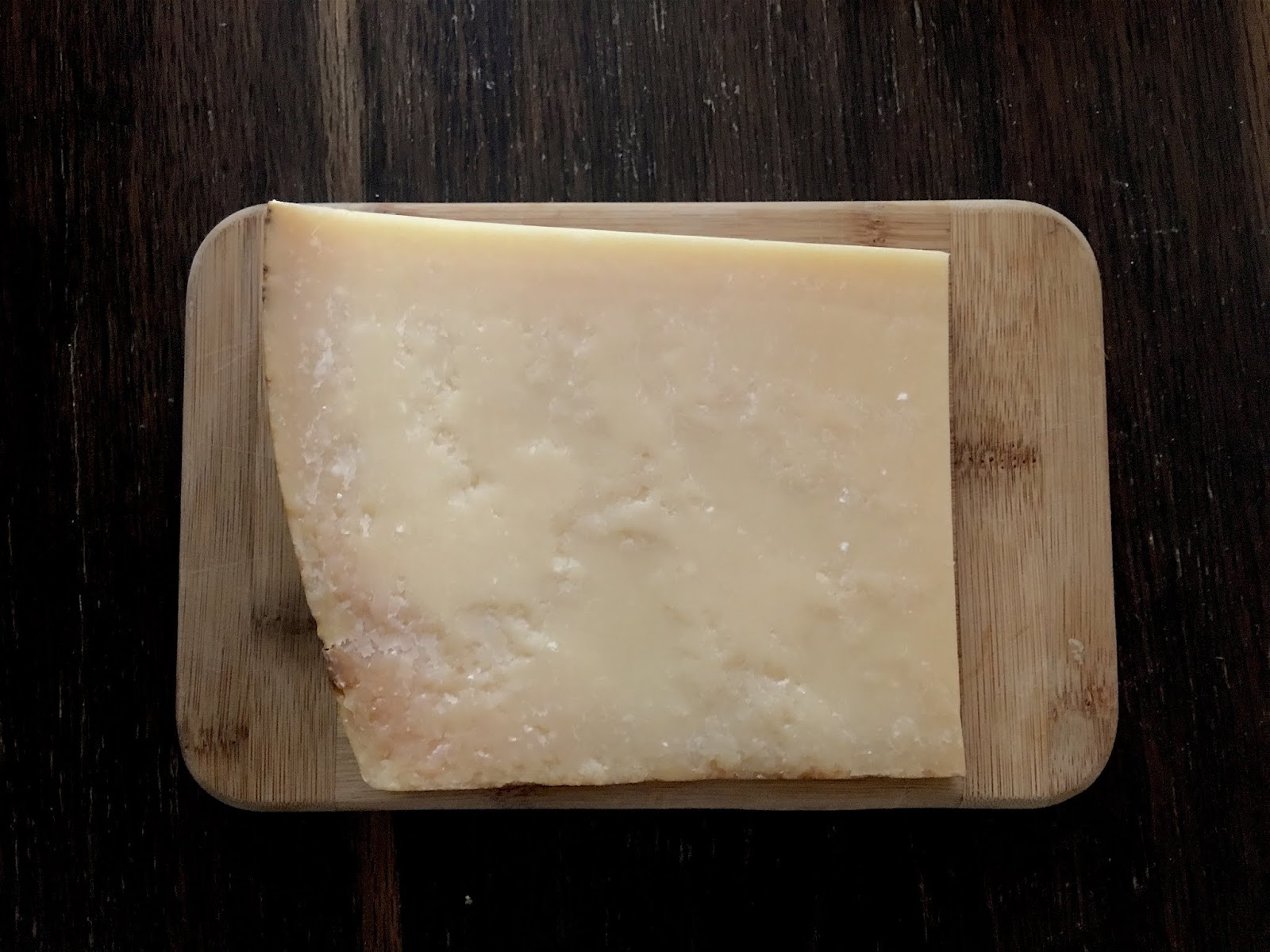
Yes, apart from some brave newcomers these three have classically had a pretty handy corner on the market. I didn’t even know to look for today’s cheese, Grantrento, in fact we stumbled upon it when we popped into a dairy on our last trip to Italy. Nestled in the Val de Non in the mountains of northern Italy, surrounded by dramatic canyons, vineyards and apple orchards, one finds this little gem. Grantrento. Looks like a grating cheese. Smells like a grating cheese. Made like a grating cheese. But can it hold its own??


Origin: Trentino, Italy
Rennet: animal
Milk: Cow, unpasteurized
Affinage: 12 months or more

Notes:
This would to me be an argument for always going into every local dairy you come by and just having a go at whatever they’re selling. 

Thoughts:
In comparison to your more well known King of Cheese, Grantento is rather more peppery and less salty. A charming crunch and well balanced fattiness makes this a winner by itself or as a garnish. Towards the end you get notes of baked mushrooms and the raw milk tang is pleasantly present in every bite. It is not a replacement for King Parm, but after eating it on pasta and cheese boards for a few months in different constellations I would happily stock it in the Functioning Cheese Refrigerator. If only because it meant I got to keep on visiting Italy to buy more! 


Not a bad place to grow apples and make cheese! So many apples. Much more apple than cheese. That's why the valley is known as the Big Apple.  Land of 1000 Valleys. Valley of 1000 Lands. 


Tuesday, February 12, 2019

Ricotta Fresca de Parma, San Salvatore, or The Dirtbag Grand Tour Pt. 2


Ricotta. How is it that the world is not just raving about ricotta? I mean, if you were to believe the news, avocados are effectively the only thing that ‘irresponsible’ millennials are allowed to spread on toast, cover with salt and balsamic vinegar, and crush into their mouths to drown out their sorrow at the economy, political system, and environment having been left in ruins by previous generations.

But the news is wrong! There’s also ricotta. And ricotta toast. And it's one of my favorite cheeses/meals. It doesn’t do much to stop the privatization and degradation of irreplaceable public lands, it doesn’t help in the fight to ‘throw the bums out’ and restore credibility to a representative democracy, and it doesn’t look likely to bring the average wage into sync with this decade(century)…. oh guys. But it tastes good.

I’m not advocating for gastronomic escapism. Maybe I just need a little lift today in light of the realization that all the relative stability we take for granted is in fact an incredibly fragile and delicate dance that, if history is to be relied on even a little, will surely collapse under the fatigue and strain, and that this will likely happen in our lifetimes. I don’t mean to cry wolf here on this forum usually dedicated to the pure pursuit of the ultimate curd, I just wonder if the Viennese born into the twilight of the 19th century ever thought things could ever fall apart so badly so quickly. 

Origin: Parma, Italy
Rennet: Animal
Milk: Cow
Affinage: fresh!!!


Notes: 
I’ll try to stay on topic here. Ricotta is, of course, not a cheese at all. Much in the way that Geitost ist a tricky and delicious repurposing of whey, the main byproduct of cheesemaking, Ricotta is actually a result of a further heating and handling of whey. This is great news for us, as it is generally well priced and almost universally delicious and adaptable. Even your supermarket brand will be good in recipes or dressed up with toppings, but a few special producers make a product so clean, so pure you will want to eat this right from the container. Today’s example is one such product. We picked this little number up at the Caseificio Sociale S. Salvatore when we stopped by for the Parmigiano Reggiano I wrote of recently. We had been sleeping in tents and cooking our meals over camp stoves for a few days at that point, just soaking in the absolute beauty of northern Italy's lakes. Our friends are masters of the camp stove gourmet meal, but we all agreed the short pit stop we made eating this container of Ricotta was a highlight meal of the trip. We bought it more as an afterthought after getting our requisite half kilo of 3 year Parm. I won’t torture you by telling you how little all this cost when buying it from the actual guy who stirs the milk vats…. but let’s just say the economics make a man start considering the costs of annual plane tickets compared to the relative savings on supermarket prices. But Ricotta! Best impulse buy of my life. I mean, if you are working with the same cows that make the milk for Parmigiano Reggiano… well would you want to let one drop of that white gold go to waste? Me neither. 


Thoughts:
Do you know those nature programs, where you see a snowy hillside and on that hillside there is actually a snowshoe hare or a snowy owl? This cheese tastes as fresh and as light as that new snow, quiet and smooth. It is rich. It is silky. It is everything Ricotta fresca should be, a delicate but indulgent bite that works as well savory with tomato and balsamic as it does sweet with honey or jam. The velvety texture begs to be heaped generously on bread or crackers and gives a mouthfeel that deserves its own blog post. Never has so little money purchased so much luxury. 


Seriously. #RicottaToastRevolution. 
On an unrelated note, avocados in Germany are 1) absurdly expensive and b) usually awful. Didn't know avocados could be awful? Neither did I. But I hate it. You know what doesn't let me down here? You guessed it: ricotta.  

Tuesday, January 15, 2019

Three Year Parmigiano Reggiano, Caseificio Sociale San Salvatore, or The Dirtbag Grand Tour pt. 1


Have you ever had baked beans in Boston? How about deep dish pizza in Chicago? Have you ever longed to try sourdough bread in San Fransisco or the midwest’s most confusing submission to the US national cuisine, Cincinnati Chili, in Cincinnati? That is admittedly a very US-centric list. Eh… how about a single malt on the Isle of Skye? Lángos in Hungary? Kürtőskalács in… Hungary? Feta in…. I feel like there is no good way to continue this train of thought without offending entire countries.

What I’m trying to say is that today we’re sticking to the hottest new diet craze ever to come out of an obscure and sparsely updated cheese blog: The Do The Thing In The Place Diet. Trademark The Functioning Cheese Addict. (Thats how you register trademarks, right? I declare a trademark!). I swear there’s something about cheese here somewhere. Parma! Today, and despite all evidence to the contrary, I’m writing about Parma. The city, the legend, the birthplace of (food) kings.

Years ago, when the world was young and the US had a fully funded government, I traveled to Parma with my wife and best friends as part of a camping and cheese tasting trip through northern Italy. Like a dirtbag-y Grand Tour that constantly smelled like cheese. All we were missing was a DIY converted camper-van. It was without exception breathtakingly beautiful, and I’ll have to mention the valley of Taleggio sometime later, but today prize of place goes to Parma and the King of Cheeses: Parmigiano Reggiano.

We traveled miles and miles south of the alps, across the Po River valley, and very nearly were thwarted by a downed bridge, but just when we were near to giving up we stumbled upon Caseificio Soziale San Salvatore. We were late arriving and walked in just minutes before the riposo began, but the staff were legends and not only sold us their wares but also gave us a tour. A tour of their beautiful beautiful aging room. A tour of the (already finished for the day) vats. A tour of the brining room. We walked past and gawked at a small fortune’s worth of Parm, and as the photos give evidence I was completely overwhelmed. I speak, of course, effectively no Italian, but as it so happens having 100% of your vocabulary in a language be cheese related makes you fairly well situated to talk to a cheesemaker. We purchased a three year reserve Parmigiano Reggiano and a tub of Ricotta Fresca, thanked the man profusely, and retired to a nearby park to descend upon our bounty.

That is the story. Here is the cheese.


Origin: Parma, Italy
Rennet: Animal
Milk: Cow, unpasteurized 
Affinage: 3 Years! Woop Woop!


Notes: 3 Years of aging technically makes this a ‘Stravecchio’ example of its kind, but here’s the real hot tip: They definitely had more aged versions there in that beautiful, beautiful cheese case. So if you are all about adding some -issimo to your Stravecchio (proof that I don’t speak Italian), go to the source. That being said, is the 12 month version also fantastic? Abso-lutely. Only, make sure you’re getting the genuine article. Parmesan need not apply. Not even ironic-hipster artisan-revival Parmesan in redesigned chic green bottles. Just trust the stuff with the seal on the rind. 


Thoughts: Ok. So you’ve had Parmigiano Reggiano before. Cool. The big spoiler alert here is that this also tastes… like Parmigiano Reggiano. I mean, it should, because it is that same cheese that you had at 12 months but this one has been aged and flipped with decreasing frequency for another couple trips around the sun. Does it taste more… intense? Yeah, probably. How often do you just eat a plain slice of Parm? A little goes a long way. A lot goes a long way, too. Too much probably goes all the way to the hospital. This is not health food, no matter how pretty it looks on your Insta. Of course the flavor of the 3 Year is somewhat more concentrated, the texture noticeably drier, and the bite of that unpasteurized milk ever present. The truth is, dear reader, we tore into it like it was our last day on earth and didn’t look back. That half kilo of Parma Gold lasted us a good long while and was the star of many an appetizer and pasta dish, but to sit down and describe it today feels… cheap. It deserves poetry, it deserves fanfare, it deserves to be hunted down and bought from the kind man behind the counter in the white apron. It’s a good cheese. You will like it.


The train trip through the alps from Germany to northern Italy is absolutely stunning. Even if the destination wasn't a wonderland of freshwater lakes and mouthwatering delicacies, which it definitely is, the ride itself would be a worthy vacation.  


Monday, January 16, 2012

Lou Bergier Pinchin, The Cheese Of The House

Actually, the name means Father of the House, but this a cheese blog, after all. 
This is no ordinary cheese, this is actually one of those crazy progressive tree-hugging earth-saving vegetarian cheeses. Watch out, I hear they only eat whey. Or something. 
But really, though, this is fun even as vegetarian cheeses go. It doesn't use the usual thistle nonsense, instead it's the so-called Kinara Method, with alpine flowers only. This is a fun and oldschool system, but it certainly works cheese magic. The name is in reference to Nonno Magno, the grandfather of the founder, and all that Italian familial love is present in the rich paste of Lou Bergier Pinchin
Origin: Piedmont, Italy
Milk: Cow, unpasteurized
Rennet: Crazy Kinara vegetarian
Affinage: 60 days
Notes: Don't be put off by the natural and soft rind, it's definitely still delicious. Funky though it may look, it's a keeper. 
Thoughts: Chewy, ultra creamy, this cheese has everything. Meat notes. Salt notes. More meat notes. More salt notes. Nothing like Italian cheeses to make you think you're eating steak. Delicious milky steak. The texture is what sets this apart, chewy and sticky, it melts on the palate once it heats up. It has a Mochi-like beginning texture, with a milky and fully over-the-top creaminess carrying the flavor along. Mushroom and garlic tag along because, hey, who doesn't like them?


Flat tires on my car tried to kill the Cheese, but the cheese overcame it with the power of awesomeness and tire patches!!!!!

Tuesday, December 6, 2011

Sottocenere, Soottottottottottottottottottttttttooooooo Good!

I.... I don't know.

Hello dear reader.
To be totally honest I'm a little surprised that I haven't already posted about this cheese, as it is both decadent and delightful. Both enticing and exquisite. Both om and nom-worthy.
Some time ago I posted about a truffle cheese, Caciotta al Tartufo, and if any of you aspiring and accomplished cheese sleuths managed to track some down then I have good news for you. There is something ever better to tickle the tongue and overwhelm with umami; Sottocenere.

Made in the Veneto area of Italy, which is to say way up North for us lay-folk, it is a one-of-a-kind cheese. Using quality truffles and a solid paste to back them up, this cheese is a little slice of cheese indulgence. Alternatively it's a large slice of cheese indulgence, but then who's counting calories here anyways.
Origin: Veneto, Italy,
Milk: Cow, pasteurized
Rennet: Animal
Affinage: ~4 months
Notes: The rind is covered in the ash of cinnamon, licorice, nutmeg, cloves, and fennel, giving it an enticing texture as well as a complex and mysteriously dark sweetness.
Thoughts: This is one of those cheeses that you really don't need too much of to really enjoy. Get a small sliver and what you'll find is a taste both decadent and deliberately well balanced, bursting with flavor and yet not overbearing. The semi-soft paste gives way with a mere suggestion and melts even more easily on the tongue, every worthy bite a full and nuanced display of carefully pasteurized cow's milk. Let's see, there was something else hereOH! Truffles, yeah this cheese has some of those too. Like the shavings so nicely visible in yonder photo. For those of you following along at home, those are hand selected black truffles that are thinly sliced and mixed in with the curd before aging. It's like when you're eating a chocolate chip oatmeal cookie; the cookie itself is great and full of flavor and you really wouldn't complain too much if that was all there was BUT.... what was that?
Chocolate chip flavor explosion.
In all seriousness, though, the truffle slices are not just for decoration in this cheese, they take their flavor-enhancing duties very seriously and the dark savoriness is the perfect foil for the mild but full creaminess and airy sweetness of the cow's milk.

Trust me. I've eaten a lot of oatmeal chocolate chip cookies in my day.

Friday, December 2, 2011

Nocetto di Capra, Because Italy Needs Goat Cheese Too

Ladies and Gents, today we have a quick post. Quick post. Here's the thing. This cheese addict is about to host a cheese party, which means signs, platings, and all host of other cheese-related busy work. But, thanks to my pre-New Year's New Year's resolution, I will keep the posts on time. No matter the cost. The cheese must flow. The Cheese Must Flow. 
Every nation has a goat cheese of some sort, but fresh goat cheese is not typically associated with Italy. They do have their own examples, though, such as today's Nocetto di Capra. Made in the Lombardy region of Italy from herd of Orobica goats, it is a bold entry into the goat category. But is it enough?
Origin: Lombardy, Italy
Milk: Goat, pasteurized
Rennet: Animal
Affinage: 3-5 weeks
Notes: Soft, snowy white rind.... edible.
Thoughts: Notes of sweet, cream, and decadence (that’s a note, right?) flood the palate within seconds of trying this Italian treat. The rind brings a more savory, earthy, and almost grassy feel to Nocetta, but on the whole it is a very mild cheese. Even in it’s sweetness it is almost aloof, even in its decadence almost reserved. Think a cheese can’t have human characteristics? I beg to differ. Floral notes add some variety to an otherwise one-dimensional flavor making for a decent if not outstanding cheese. The problem with fresh and young goat cheeses is that there are so many one really has to stand out to be noticed. Now I'm out of stance-related figures of speech.


Having trouble making your goat cheese stand out among the rest? This joke has no punchline! 

Friday, November 25, 2011

Casatica, Not Just an On-Time Post

Get our your flying-pig nets, those ones that you have, because they're... well they're flying. The pigs, not the nets... shoot.
This on-time post is brought to you by the magic of Thanksgiving and having a week off of school. 
Also blogger-guilt. 

I'll just come out and say it, today's cheese blew me away. Wild stuff, let me tell you. The story here, stolen from the folks over at Cowgirl, is one that should excite any cheese lover. Brothers Alfio and Bruno Gritti took on their father's creamery with a big old herd of cows and have since moved to an all buffalo line. All buffalo, as in all rich/meaty/bold/creamy/fatty/delicious. Apparently they make 25 different kinds of buffalo milk Italian cheeses so..... only 24 more to go?
Oh, and today's is called Casatica.
Origin: Bergamo, Italy
Milk: Buffalo, pasteurized
Rennet: Animal
Affinage: 4-5 weeks
Notes: Actually, these are the same folks to make the delicious Gran Blu di Bufala, a cheese I've tried and recorded but have yet to blog about... so many cheeses so little time!
Thoughts: If ever there was a surprising cheese, this is it. It looks unassuming enough, plain yellowish paste with some uneven eyes throughout, but one bite and your tastebuds are sent into shock. The smallest square of this cheese gives you the sensation of eating an entire meal, and a hearty one at that. The first course is bread, followed by and dipped in a rich mushroom soup. This cheese is so rich, thanks to that protein and fat strong buffalo milk, that you have to remember you’re eating cheese and not butter. Hints of salt bring out flavors of the local flora, and the final course is the meatiest steak you have ever had, garnished with garlic. This cheese doesn’t so much break down on the palate as it does blitzkrieg it’s way to your tastebuds and set up a forward command center. The rind… well it’s dry an bland and doesn’t add much, but the paste! The pâte! Milky and yet full bodied, bright in the back of the mouth while heavy on the tongue, this is something to be thankful for!


But seriously, I'll spend about 3 hours tonight updating my cheese records. Quick, pity the poor blogger.

Wednesday, October 12, 2011

Quadrello di Bufala, Washed Rind Lovers Rejoice!

You know how you'll hear people sometimes say "if only they would cast [actor] in [role], he was made for it", or [if only [politician] had a chance of winning [office]", or perhaps more likely "if only [sports sports sports sports sports idon'tevenknow]"? Maybe you do know, but even if you don't bear with me. Anyone who has tried the delightful Taleggio knows just how good washed rind cheeses can be, but the more creative might have considered an even more decadent possibility; swapping that plain-jane cow's milk out for some buffalo milk. 
Well.
Someone went and did just that. Ladies and Gentlemongers; Quadrello di Bufala.
Origin: Italy, as in the Sunny Shores Of
Milk: Buffalo, pasteurized
Rennet: Animal
Affinage: 1-2 months
Notes: Pretty much all you need to know is that buffalo milk has even more fats and proteins than sheep's milk and considerably more than cow's or goat's milk. That is pretty exciting from a flavor standpoint. 
Thoughts:
 Everything you could hope for when you hear the words “water buffalo” and “Tallegio” in the same sentence. The depth of flavor is instantly noticeable through the still young presence of the water buffalo milk. Every last fatty atom of this cheese cries out in an chorus of cheesy cheer, and that’s not even taking into account that it’s a washed rind. Whoever it was that wanted a meatier Tallegio must have been a genius because I could swap this out for ground beef in my next hamburger and probably never go back. The salt is perfectly balanced to draw forth the flavor and linger shortly before being overwhelmed by the sheer creaminess of this paste, and the overall effect is dark but sweet and salty, meaty but incredibly clean. I love cow’s milk Tallegio. I will always love cow’s milk Tallegio. I just may not be as in love with it as I am with this one.


The world needs more buffalo milk. I want a buffalo milk milkshake, buffalo ice cream, buffalo milk product cappuccino. Quick, someone call Starbucks. We'll call it a Bufala. 

Tuesday, October 11, 2011

Pecorino Foglie de Noce, Italian for Delicious Cheese You Should Try

Everyone has heard of Pecorino this and Pecorino that, but where is a truly exciting Italian sheep's milk cheese when you need one? I know I'm always asking myself that question, as I'm sure you are as well. My usual go-to would be the fantastic Pecorino Ginepro, but there is a newcomer, a challenger, a rival. Actually this cheese is pretty oldschool, but in any case here you have it folks: Pecorino Foglie de Noce. It is a standard-aged Pecorino with the twist that it has been aged while wrapped in walnut leaves and rubbed down with olive oil. Yes, that is in fact an equation for delicious. 
Origin: Italy
Milk: Sheep, unpasteurized
Rennet: Animal
Affinage: 2-4 months
Notes: Just goes to show that a little olive oil rubbing goes a long way. 
Thoughts: A subtle but deep flavor characterizes this cheese, so reserved that it takes a decent chunk just to pick up on its finer notes. The usual pecorino saltiness is present but a nutty, almost smoky tone develops and carries the cheese. This must be thanks to that olive oil treatment, and it is something to relish. Devoid of practically any creaminess and aged to crumbly perfection, this one may be a little harder to love by itself but give it a chance in recipes or on a plate with some olives and you’ll be in for a treat.


Anyone out there know the name of that one song that starts with the bass line "ba-bum bum bum bum bum ba-ba-baba ba-bum bum bum bum bum ba-ba baba ba-bum bum".... bluesy song.... in pretty much every move/commercial since the dawn of time.... anyone? 

Wednesday, September 14, 2011

Ubriaco al Prosecco, Want Some Cheese With That Wine??

Haaaaaaaaaaaaaaaaahahahahaha.
Well that's all for today. Just the title.

What's that you say? I'm days behind in posting and you want a legitimate post with something cheese related and not just bad wordplay?
Fine.

As the dedicated reader of the Functioning Cheese Addict will already know, the world of cheese is full of alcohol-infused curds and this blogger is all about reviewing them. Some time ago I reviewed an Italian delight called Ubriacone, and today we have a similar and yet totally different offering. Although the first part of the name still refers to the drunken nature (see the linked post for a short but practical lesson in Italian), the differentiating factor is also right there in the title. Unlike the usual red wine cheeses, this little guy calls on the power of prosecco. What you get is Ubriaco al Prosecco and, just like that really friendly guy sitting next to you on the bus, it may have had one too many. [Insert cheese affinage-age related alcohol joke here] 
Origin: Italy
Milk: Cow, unpasteurized
Rennet: Animal
Affinage: Less than one year
Notes: Immersed in Prosecco wine and then covered in prosecco grape must. This cheese likes wine like it's water and the well's running dry.
Thoughts: This unassuming-looking cheese is a surprise in many ways. Much softer than it looks, it has the casein crunch of an aged cheese. The real kick, though, is in the flavor. The aroma gives a hint of the experience to come, but even it cannot warn of the wine assault that follows Truly this is not a grape-y cheese like Ubriacone, this is a drunk cheese. The flavor hits your mouth even where the cheese does not and bites at your tongue, stings the nostrils, and lingers with the flavor of raw and white wine mixing angrily together. Yes it is an angry mix of flavors, but angry like a thunderstorm; it all comes together in a perfect cacophony of notes and if it fell from the sky and hit you it'd probably be curtains. That's life, though.


If all my friends and family are right and cheese is what finally gets the better of me, it had sure as shooting better be like that. None of this LDL nonsense, what you know about a clean bill of health?


Tuesday, September 6, 2011

Caciotta al Tartufo, Welcome to Truffle Cheese

A brief admission, if I may:
This is not the best truffle cheese. It is also not the worst. Why do I introduce the magical world of truffle-infused cheeses to you with a picture of mediocrity? Why does one wait until after the first bite to add salt and pepper to a dish? So that he or she may appreciate the seasoning the more for it.
Cheese and life lessons, it's pretty much an all-purpose blog.
Back in the realm of things you actually clicked here today to read, allow me to finally give to you Caciotta al Tartufo, the first in a series of truffle cheeses. Truffle, to those fortunate enough to have come across it, is a tuber of almost other-worldly flavor-imparting powers. It's like Peter Parker's radioactive spider, except if Spiderman was a cheese, and the spider was a umami-packed plant, and the plot involved Spiderman going really well with medium to bold red wines. Produced, as the name would suggest, in Italy, Caciotta al Tartufo curds are mixed with Umbrian black truffle shavings to create an enticing looking paste and a decent, if perhaps not incredible, flavor.
Origin: Italy
Milk: Cow and sheep, pasteurized
Rennet: Animal
Affinage: ~2 months
Notes: The quality of the truffles used is going to play a huge role in the end product and, unfortunately, Caciotta al Tartufo didn't get the prime cuts.
Thoughts: So you go tossing around a name like "al Tartufo" and people are going to get excited. One would hope that anything "al Tartufo" would be a delight. Burger al tartufo: yes please. Ice cream al tartufo: sign me up. Chocolate milkshake al tartufo: Mercy. Burrito al tartufo: Challenge accepted.
Cheese would also fall into the category of "yes please and thank you", but not all that glitters is worth eating. On the whole this cheese, while certainly good, leaves something to be desired. It is a mixed milk cheese, but it lacks a strong showing from either category. Notably absent is the oily richness that can make sheep cheese so desirable, the same with a strong or worthy creaminess from the cow's milk. The truffle flavor, while present, fails to live up to the grandeur typically associated with everyone's favorite tuber. That isn't to say it's not a tasty bite, but for true truffle titillation one must track the tuber's true.... true........ dangit. You've got to look farther.


Bob Dylan, man....
Bob Dylan. 

Monday, August 22, 2011

Bianco Sardo, Life's Tough in the Med

Except not really, as this lovely addition from Italy shows. Made in southern Italy proverbially right between the proverbial heel and the proverbial toe of the proverbial boot, Bianco Sardo is a sheep's milk cheese not to be missed. It is also known as Canestrato for the texture on the rind, imparted by the baskets traditionally used to mold the curd. The reed baskets also impart their own flavor and help shape today's cheese into a real treat. How could life ever be difficult when such a cheese exists?
Origin: Basilicata, Italy
Milk: Sheep, raw
Rennet: Animal
Affinage: My Italian is a little rusty so I couldn't quite make out the exact affinage, but given that it's a hard cheese I'd place it in the 5-7 month range.
Notes: The sheep that help produce this cheese graze exclusively on the Apulian fields of the region, locking down its unique flavor profile. 
Thoughts: Characteristically Italian, with the expected oiliness of sheep’s cheese. The interior is a lovely dry but creamy paste that breaks down nicely on the palate and unfolds into a complex, if a little heavy, taste. It has a saltiness reminiscent of Pecorino Romano but without the intense sourness, instead earthy and minerally tones play off of a understated creaminess for a truly savory and delicious cheese.

404 Error
Random Thoughts Not Found 

Ca Ru Blu, Every Time I Think I'm Out the Pull Me Back In

I stumbled upon this blue in a local cheese store in Regensburg, and on the off chance I hit upon gold. Gold, Jerry!
I couldn't track down too too much info on this particular cheese but here's what you need to know. It's delicious and you should track it down. Track it right down and eat it. Ladies, Gentlemen, and all People of the Internet; Ca Ru Blú.
Origin: Italy
Milk: Cow, unpasteurized
Rennet: Animal
Affinage: 3-5 months
Notes: This blue, already a delicious bite, comes standard with a wicked rind. That mouth-watering covering you see in the picture here is a mixture of rum and roasted coffee beans. It is a specialty of the Südtirol Provence, and I can see why.
Thoughts: The bold appearance of this cheese is what first tips you off to the impressive flavor. The intense rind dares you to give it a try, and what begins as a fully creamy texture and flavor quickly builds into something more. The minerality of this blue is perfectly balanced to deliver a sharp and power flavor with a bite at the end but no unpleasant aftertaste or grit. Eaten with or without the rind this blue is both complex and powerful, a delight.


A Note To My Dear Readers
As of the posting of today's cheese I am recently back at school, in class and so forth. I'll be keeping the posts up as much as possible but I beg your understanding and patience if there's a slip-up or so. Do not fear, however, the cheese will flow.  

Friday, August 19, 2011

Gorgonzola Piccante, Dolce's Scary Big Brother

In the world of cheese families, you know the one, the general rule of thumb is that the older brother is always the jerk. While little brother is sweet and non-confrontational, older brother is fiery and rude. Little brother bakes cookies. Big brother eats them and replaces them with coal. Little brother buys a puppy. Big brother puts one of those collar-biscuit contraptions on it so it runs away but can never quite reach the biscuit. Little brother is aged 3-5 months, big brother is aged around 6 months and is a jerk. A tasty tasty jerk. 
And.... hold on.
Sorry, I got lost in there somewhere, today's cheese is Gorgonzola Piccante
Origin: Lombardy, Italy
Milk: Cow, pasteurized
Rennet: Animal
Affinage: 6-8 months
Notes: All the same lovely stats as the more easily palatable "dolce" version, but aged to a prickly sharpness. Also known as Gorgonzola "naturale" depending on who is labeling it.
Thoughts: Usually a very fine, almost gritty, texture and very sharp flavor would be very dissagreable but this Gorgonzola breaks the rule. Even in the thick of the sharpness it remains smooth enough to be not just palatable but delicious. The strong aftertaste makes for a good complete package, but on the whole I still prefer the "dolce" version. The piccante certainly has a more intense flavor, but I find that the dolce is much more rounded and generally more decadent. Unfortunately it's no Roquefort nor Stilton, and the sharpness comes across as lacking some of the soul of the dolce. Check it out to get that perspective on how cheeses age, but for me dolce will always be the best. 


Just To Set The Record Straight 
The middle child/cheese is always way cool and everyone likes him. Or her. Or it, in the case of cheese.  

Friday, August 5, 2011

Gorgonzola Dolce, As Great an Italian Masterpiece as Ever There Was

In posts past I've made quite a fuss about the glory that is real-deal Gorgonzola, and finally today I will fill you in, dear reader, on just how delicious it is. 
This is the cheese your grandparents told you about, the one from the old country that is filled with both a magical presence and yet a completely approachable humble honesty. It is not as brash nor as pretentious as the self-proclaimed Kings of blue from England or France, it simply packs a lifetime of incredible flavor, centuries of hard work and refinement, into an accessible and delicious paste. 
From the region of Lombardy, this cheese and it's close cousin Stracchino are both made from milk gathered during the cows' seasonal migrations during spring and fall. This tired, or "stracca" milk creates two major varieties of cheese, both Gorgonzola Dolce and it's older brother Gorgonzola Piccante (or Naturale, etc). The older version is a markedly different cheese, and I'll get to it soon enough. For now, the masterpiece that is Gorgonzola Dolce:
Origin: Lombardy, Italy
Milk: Cow, pasteurized
Rennet: Animal
Affinage: 3-5 Months
Notes: Pierced with needles to allow the Penicillium Roqueforti to flourish, rind washed in brine during curing process. Made with two milkings one after another, high butterfat content. These are all good things, these are all things we like. 
Thoughts:  To start out there are very few cheeses that smell this good. When allowed to come to room temperature the sweet and tingly smell of cheese, spices, and even fruit fills the air with an aroma that by itself is mouthwatering. The flavor is no letdown. Sweet and lush with a present but unobtrusive kick weaving in and out, it is a thing of beauty. The paste, thanks to the young age and the rind washing, is so soft it begs to be spread and protests any other methods by sticking onto whatever you throw at it. The salty tones beneath the whole experience only heighten your awareness of just how full the creaminess is and give the spice of the mold a chance to shine as well. The thin rind along with the already decadent texture round out an experience that is so good you should be careful how much you bring to room temperature at a time; you will eat every last bit in one sitting. It is, for all intents and purposes, a different cheese category altogether than Roquefort or Stilton, any comparison would be for nothing because Gorgonzola just hits a different part of the palate. Good grief that’s delicious.  


Random Thought to Burden You Further With
I hope to fix the regularity of these posts and at the very least keep overall quota of posts met, but there is nothing like being in country for the first time in a year to make you forget what free time looks like. There's my story and I'm sticking to it. And now back to your regular programming

>>Silly cheese-related joke<<  


Thursday, July 7, 2011

Asiago D'Allevo Mezzano, With Age Comes Wisdom

Which, for a cheese, roughly translates into deliciousness.
This is the aged variety of Asiago, the trademark Italian cheese which has become so well known in recent years that even frozen pizzas are boasting it on their 4-cheese selections. Pro tip: that asiago is about as closely related to real Asiago as Gordon Brown is to Charlie Brown.
Asiago is perfect as an Italian table cheese, and here in its semi-aged state one can see just how important the affinage process is.
Origin: Po River Valley, Italy
Milk: Cow, unpasteurized
Rennet: Animal
Affinage: 5 months
Notes: A couple of things here. First of all let us address the name, where Aisago is self explanatory, D'Allevo distinguishes it as the more traditional and cooked curd variety of Asiago, and Mezzano distinguishes it further as the medium-aged variety of D'Allevo Asiagos. The important words here are Fresco, Mezzano, and Vecchio, covering the range from youngest at 2ish months to oldest at over a year respectively. Also that it's a cooked curd cheese, meaning the transition from milk to cheese involved the heating of the curd more than otherwise necessary in order to force it to release more whey.
Thoughts: The flavor is spot on, but sadly something else is amiss. The deep, rich creaminess and the sweet, nutty notes that make Asiago so good both for folks just starting to branch out from cheddar and also as a reliable table cheese carries Asiago D'Allevo Mezzano pretty far but is cut short by a failure of the texture. Somehow the texture falls between the chewy, crumbly goodness of aged Goudas or Cheddars and the soft give of a Pecorino Fresco. Even similarly aged cheeses from Spain, such as some varieties of Manchego, pull off the flavor/texture combination better, whereas here I was left hoping either for a sharper flavor and more of a fight or simply a moister paste. By all means try this cheese if you come across it but also be on the lookout for its differently aged brother and sister (my lawyer has advised me against assigning genders to cheese so I'll let you do it instead).


Caution
Making your own real-deal "quattro formaggio" pizza could get expensive if you're holding out for the true imported stuff. So deliciously expensive.  

Tuesday, June 28, 2011

Piave Vecchio, Parmigiano Reggiano's Hipster Little Brother

You see, because it's Italian, a cow's milk cheese, tastes similar to Parmigiano but is younger and you've probably never heard of it. 
Again I'm stretching the acceptable boundaries of metaphors, but I'll stand by it. 
This is another cheese coming from the fertile Veneto region of Italy, taking its name from the Piave River Valley in which it's made. Piave Vecchio is flavor-packed and, though it is a pasteurized-milk cheese unlike "King Parm", it is delectable and well worth tracking down. 
Origin: Veneto, Italy
Milk: Cow, pasteurized
Rennet: Animal
Affinage: 12-14 months
Notes: The name is pressed repeatedly into the rind, and if you're looking for a softer and milder version look for Piave with a blue label, I'll stick to the older red label "vecchio" variety.
Thoughts: This cheese, though dry, is surprisingly sweet, so much so that the flavor carries throughout the bite and almost drowns out the nutty savoryness. Almost but not quite. The texture is similar to a younger parmesan and it is about as creamy, and notes of fruit play alongside delightful crunch of the aged paste. This cheese has serious flavor and flavor, texture, and creaminess balance nicely to produce a versatile and potent cheese that's as at home grated over pasta as it is as a table cheese. Italy never ceases to amaze me with the depth and beauty it draws out of cow's milk, and Piave is as good an example as any of just that. 

Caution
If you are reading this blog and some photos seem weird, some texts are jumbled, or something just looks to be generally awry, check with a different browser. I think I may have just out-cheesed the internet on accident.   

Monday, June 27, 2011

Condio, An Unknown Italian Treat

It really is just amazing how many different varieties and sorts of cheeses there are to be tried, and every time I have a moment of weakness and lose faith in there being more cheeses out there to try I take comfort in cheeses like today's. Condio is a cheese I've only encountered at work in Longmont, CO, but if it made it to the middle of the US all the way from Italy then surely it has lots of as-of-yet untasted friends waiting at home. 
The Italians seem to love their mixed milk cheeses, and this time around we get an extra kick from the raw nature of the got and cow's milk used. The rind is a mix of oregano, marjoram, parsley, and sesame, and the combination of these herbs and the rich milk makes for a truly delicious cheese.
Origin: Veneto, Italy
Milk: Cow and Goat, raw
Rennet: Animal
Affinage: 3 months
Notes: Don't be afraid to try those otherwise unheard of cheeses that sit on the shelves passed over by the typical shopper, after all by purchasing strange cheeses some have purchased truly angelic curd!
Thoughts: Light on the palate, this cheese has undertones of milk and mushrooms, with a nicely sweet overtone. The rind is what really clinches the flavor, however, and the mix of herbs add the perfect rich grassiness to compliment the sweetness of the cheese. The whole tone of the flavor is floral but the mixed milk gives a solid base and a measured creaminess carries throughout. I'd never heard of Condio before finding it on the shelves at Cheese Importers, and indeed it doesn't feature in any of the cheese books (yes, "books" plural. Live hard, cheese hard) I own, but it is well worth asking for and is a great example of the range in flavors possible with cheese. 


Caution
"Live hard, cheese hard" is not actually my catchphrase. I don't think I have a catchphrase.  


PS: There is some very exciting news/tips to be released with an appropriate post later this week, get eager! 

Tuesday, June 14, 2011

Mozzarella di Bufala Campagna, The Good Stuff

Mozzarella as I first knew it was "the pizza cheese", that stuff you bought pre-shredded in little plastic bags and dumped out on top of home made pizzas. There was probably even a helpful pizza recipe on the back of each bag, just in case the dough+sauce+cheese+toppings concept was a little hard to get a handle on. Later I would be a little unsettled to hear tell of this fresh mozzarella stuff, floating as it were in a sea of translucent cheese water in olive bars and fresh food sections of delis. I feel like the education system of the US let me down.
Good, fresh Mozzarella is, of course, one of the simplest joys in the cheese world; a real glimpse of how alive, dynamic, and close to nature cheese is. It's so young and fresh that eating it is often like chewing on a richer milk, and all that weird water in and around fresh Mozzarella is whey that is still trapped in the curd and trying to get out. That fresh. Don't be scared of the whey, it guarantees that the Mozzarella you get is in the best possible condition for your enjoyment. This is a good thing.
Mozzarella is a member of a special group of cheeses (ok, so really most all cheeses are special); the pulled curd cheeses. This describes the process through which Mozzarella is made, and a labor intensive process it is. The curd is first cut into strips and passed through a machine called a chittara (guitar) that uses wires to cut the curd into small pieces. These pieces are placed into nearly boiling water to force whey out, at which point the curds are pulled, twisted, and knotted by hand until the master cheesemaker deems the batch to be done, a measure of skill that must be learned but cannot simply be taught.  Once properly pulled, individual pieces are torn off (from the Italian verb mozzare), shaped,  and immersed either in cold water or brine depending on the desired shelf life, finishing the whole ordeal and producing what fresh cheese lovers worldwide so adore. Other members of the pulled curd group include Provolone, Scamorza, and string cheeses.
But there's more. Before the cow herds of the world took over the cheese scene Mozzarella was made exclusively with the fattier, richer, and overall simply decadent milk of the water buffalo. Mozzarella di Bufala Campagna is that cheese, reviving the centuries-old tradition and now protected by Italian law. Yay! This is truly the best Mozzarella that you can find, outside of making friends with an artisanal Mozzarella maker and buying it fresh and still warm from being made minutes before. Even when that is an option, seek out Mozzarella di Bufala Campagna and enjoy a taste of something ever so much more so than any Mozzarella you've had before.
Origin: Campagna, Italy
Milk: Buffalo, pasteurized
Rennet: Animal
Affinage: Fresh cheese!!
Notes: There are some other buffalo cheeses out there, if you happen across one try it out; the flavor is a refreshing departure from cow's milk and should lend a real depth to any type of cheese.
Thoughts: This Mozzarella packs quite a punch. A meaty sweetness starts off the flavor and it only develops over the course of the bite. A cleaner sweetness builds up and lingers on the palate, and a very rich milkiness and a beautiful texture really round out the flavor. Such a young cheese does have a rather simple and understandably clean character to it, but in it's simplicity it excels. Just the slightest hint of depth is what sets this Mozzarella apart from its cow-made brethren, and you would do well to find some and eat it as soon as possible; it will never be as good as it was yesterday. Mozzarella di Bufala Campagna stands head and shoulders above the typical store bought garbage and will bring cheese lovers to their knees, whether it's eaten with tomatoes and such or just as it is; a slice of pure cheese pleasure. 


Caution
It's bad form to eat this stuff like one would and apple. No matter how tempting and delicious that might be. Not that I would know.

Monday, June 13, 2011

Parmigiano Reggiano, Not Just for Pasta Anymore

Sometimes there's a cheese, and I won't say the "best cheese" cause what's a "best cheese", but sometimes there's a cheese, and I'm talking about Parmigiano Reggiano here. Sometimes there's a cheese, well it's the cheese for its time and place. It fits right in there. And that's Parmigiano Reggiano, all over your plate. But I've done introduced it enough.
Whether the name is familiar or not, and it should be, Parmigiano is simultaneously one of the most widely known and available and most widely copied/imitated cheeses in this fair world. The copy here being the more North-America friendly Parmesan, as you might find pre-grated and ready to dump on top of some pasta. Now I grew up on the above-linked stuff but let there be no mistake: the cheese that I piled high on my spa-geht is not Parmigiano, it's an American-made analog that uses pasteurized milk and a different recipe and is not actually very good except for, well, piled on pasta where the flavor is an additive and not a standalone.
True Parmigiano Reggiano, on the other hand, is another name/area controlled cheese from Italy, where it must be made in a tightly controlled zone and only between the April 15th and November 11th to ensure the freshest pastures. Aged at least 14 months but up to 5 years and coming in massive, authenticity-stamped 66lb (33kg) wheels, it's a cheese to celebrate.
Origin: Top Secret Locations, Italy
Milk: Cow, unpasteurized
Rennet: Animal
Affinage: 14 months and up
Notes: Made from skimmed milk, 28-32% fat content, low sodium cheese as the curd is not actually salted during the process, this is a cheese that is made very very carefully and tastes very very delicious.
Thoughts: I never really considered Parmesan or Parmigiano to be a cheese for eating any other way than how I knew it growing up, on pasta. Turns out, though, that when you get at the good stuff the flavor possibilities are mind-boggling. You see, Parmigiano Reggiano is one of those few pure flavors, one of those preciously intense flavors where the smallest sample of the good stuff is enough to bring the house down. A good balsamic vinegar is similar, or perhaps a piece of that 78% cocoa chocolate. Not surprisingly these are some of the best flavors.... ever.
Parmigiano is a dry grating cheese but will simultaneously melt on the palate nearly instantaneously, and hints of not just the salty tang that dominates commercial Parmesan but also nutty, a mild sweetness as it breaks down on the palate, and of course a creaminess that carries throughout and ties all the notes together. It is divine when paired simplistically, a little honey, or a little balsamic reduction, a little extra virgin olive oil to draw the aroma out or a thinly shaved piece with a freshly sliced crisp pear. These are some of the simple pleasures of life.


Caution
If you start referring to fairly expensive aged imported Italian cheese alongside fresh and equally decadent ingredients like Balsamic vinegar de Moderno reductions as simple pleasures you've either 
1) got the priorities of a cheese addict or
2) are bourgeois swine. With really good taste.