Saturday, October 29, 2011

Ewephoria, See What They Did There?

There are some traditions as old as the hills. 
The Gouda masters of Holland are the keepers of some such traditions, and naturally they are the last word on Gouda production. This cheese is not one of those traditions.
Aimed pretty shamelessly at the export market, Ewephoria joins the ranks such as Soignon goat brie and Cambozola in letting flavor follow market demands. While those two cheeses are mediocre if forgettable Frankensteins (or Frankenstein's monsters, if you're a purist), Ewephoria is actually pretty good. You know, dear reader, how I protest against such prostitution of palate for profit, but here's one example that stumbles upon a decent idea and executes it brilliantly. 
Origin: Holland
Milk: Sheep, pasteurized
Rennet: Microbial
Affinage: 6-12 months
Notes: There are a few different ages available, but who are we kidding. Why go for mild and meh when you can have a Gouda that screams unintelligbly in Dutch at you. Doesn't that sound like more fun?
Thoughts: This adaptation on Gouda has a pleasant flavor that develops over the course of the taste. At first the cheese starts out with a mild nuttiness and a hint of sweetness, by the end the sweetness has developed into a rich and dark toffee/butterscotch note that breaks down perfectly on the palate. This sweetness is highlighted and contrasted by the natural oiliness of the sheep's milk, which makes for a complex but not overbearing overall taste. Not too creamy, but balanced, this is a great interpretation of the classic Gouda and well worth trying for any Gouda lover. 


What is fascinating is the contrast between the characteristics of sheep's milk from Spain and that from Holland. I mean, barely 1,000km apart and they could be two completely different animals, for example there is nothing olive-oily about this cheese, but you can practically taste it in a lot of the Spanish sheep's milk delicacies. Does no one else find this really exciting? Am I all alone in the universe?


Tuesday, October 25, 2011

Carreyroüs, Racer X

Sorry, that's kind of a reach/throw for anyone who might be familiar with speed racer. It's Racer X because I have pretty much no information on this guy aside from the bare bones. How's that for a disappointing intro? 
Origin: France. Deepest most mysterious France.
Milk: Sheep, unpasteurized
Rennet: Animal
Affinage: 3-5 weeks
Notes: In the crottin style, mottled rind and stunning to look at. 
Thoughts: The soft rind gives way nicely to a smooth and perfectly moist sheep’s milk paste. The flavor begins nutty and creamy, building into a sweet and bold, full flavor with hints of grass, and a milkiness like you might find in a mozzarella. No real spice here despite the rind, just a solid example of a young sheep's milk cheese.The aftertaste is clean and leaves you wanting more.


For anyone in the Boulder/Denver area, there is a cheese festival in Aurora on the 5th. You should all be there. 

Saturday, October 22, 2011

Cabrales, The Boogey Man of Blue Cheese

It hides out in your closet, spooks young children, fills the stories of concerned grandparents, real deal boogey man stuff. 
Be afraid. Seriously, fear this cheese above all things. 
So vicious is this blue cheese that it can be tough to even find where the paste is among all the mold. Oh that mold. That fierce, fierce mold. 
Not only is it super extra moldy, it's from raw cow, goat, and sheep's milk. It has DOP status and may only be made in the northern spur of the Europa Peaks of eastern Asturias. Spur cheese, man. Spur cheese. 
Origin: Asturias, Spain
Milk: Cow, goat, and sheep, unpasteurized
Rennet: Animal
Affinage: 3 months
Notes: Slow aged for 3 months in cold, oxygenated, humid caves. A farmstead, handmade cheese made in the high mountain pastures using good old Penicillium.
Thoughts: There seems to be a slight delay when eating this cheese, perhaps because the tastebuds are initially in too great a shock to even remember to fire those signals to the brain at all. This blue is beyond sharp, beyond spicy. The mold is so densely packed that there isn’t actually much paste left at all, literally a 2:1 ratio of mold to cheese. This can only mean one thing: hide your kids, hide your wife, and hide your husbands cause it’s burning up everybody out here. Really though this is a unique flavor among blue cheeses, the cheese sticks like gum and has a spicy burn that, though it’s a little one-dimensional, grows stronger and stronger with every second and well into the aftertaste. Literally a breath-takingly intense flavor.


The baddest blue cheese I've come across so far... definitely a must for those seeking blue cheese nirvana. Witty cheese comment or something.
 

Tuesday, October 18, 2011

Campo de Montablan, More La Mancha Masticatibles

No.
This blog is not reaching you through 
THE CLOUD.
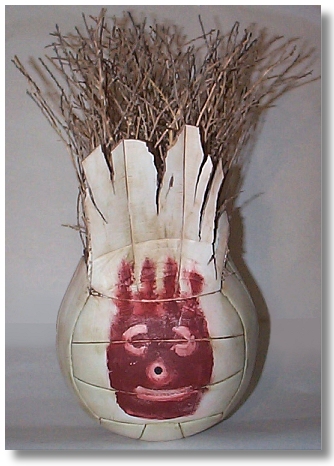
Still, I hope you can be satisfied with the usual slur of bad wordplay, flippant references, and snobbish cheese talk. If not.... then you probably never liked this blog in the first place. You're probably lost, adrift  on the endless interwaves, looking for an island of safety from which to launch your own Wilsonian adventure. Look no further, weary traveler, than these cheese-washed shores. 

There is in fact a cheese today, for those of you with the patience to bear with my wandering thought-dreams. It is a Spanish gem, reminiscent of a preiviously posted cheese; Iberico. Made from the mixed milks of goat, cow, and sheep, it promises to please. Perhaps not an earthshattering curd, but for those looking to collect a comprehensive understanding of the cheeses of the world (that's probably you if you're still reading, alternatively you just know me personally) it is a great addition.
Origin: La Mancha, Spain
Milk: Pasteurized goat, cow, and sheep
Rennet: Animal
Affinage: 4-6 months
Notes: The rind is a little deceiving, sporting the same herringbone design as Manchego. Manchego it is not, as that's a sheep's milk only affair.
Thoughts: Admittedly, the similarities to Iberico are hard to miss. The same indescribable mix of milks plays off of, well, itself, to bring an excitingly unique flavor profile. Unique except for Iberico. Pseudo-unique (because that's definitely not an absolute term or anything, right guys?). Oily and grassy, as any self-respecting Spanish cheese ought to be, it is actually very good by itself. The rich savoriness alone makes this cheese well worth trying and hints of the sweet goat and cow's milk bring a measured complexity. Although it is a rather firm cheese the creaminess is certainly present to carry all of these flavor notes through strongly and, in this Cheese Addict's book, it has just as much right to a place on the cheese plate as any other (Iberico) cheese.


THE CLOOOOOOOUUUUUUUUDDDDDDD!!!!!!

Saturday, October 15, 2011

Pyrenees, Still Loving that French Sheep Cheese

Floral sheep milk. This is the most important thing to know about these is contained in those three magical words. It's pretty much all you need to know. I'm going to go ahead and leave it there.
Origin: Basque Country, France
Milk: Sheep, unpasteurized
Rennet: Animal
Affinage: 3 months
Notes: It's a good, honest, Basque country cheese, which means you can count on solid flavor and a subtle but worthwhile profile. 
Thoughts: The first impression of this cheese is the milky creaminess. It appears quickly and coats the entire palate, not abating until the bite is almost over. Along with this wave of milky goodness is a savory but not overpowering flavor of grassy sheep’s milk, and the typical bite of the raw milk is replaced by a depth and complexity of flavor that leaves a tangy and sweet aftertaste. 
Sorry this guy is pretty short, the Functioning Cheese Addict just got a new toy in the mail today and is stepping into the future even as he posts this. Who knows, the next post could come from..... THE CLOUD. 
Or at least I think that's how it works.